
Webster Block Restoration
The 48.3-hectare Webster Block is one of three properties purchased through the original Whakamana te Waituna Freshwater Improvement Project and is located on the north-eastern margin of Waituna Lagoon/Waipārera.
Historically part of the wider Awarua-Waituna wetland complex, the site is being restored to create a mosaic of native forest, wetland and freshwater habitats that support biodiversity, improve water quality and strengthen the natural buffer surrounding the lagoon.
The Webster Block is also a key demonstration site for the Trust's Nature Credits Pilot, showcasing how restoration and innovative funding mechanisms can work together to accelerate landscape-scale environmental outcomes.

Webster Block within the wider Waituna landscape context
First Restoration Planting Completed
The first phase of the planting plan has now been implemented, with 8,500 native plants established across 6.5 hectares in 2026.
The planting programme uses the Tīmata restoration approach, combining fast-establishing pioneer species with longer-lived native vegetation. Mānuka was planted as a nurse crop to create shelter and improve growing conditions for future forest development along side other species including Harakeke (Flax), Carex, Cabbage trees (Tī kōuka) and Coprosma species. All plants were sourced from within the Waituna or neighbouring ecological districts.
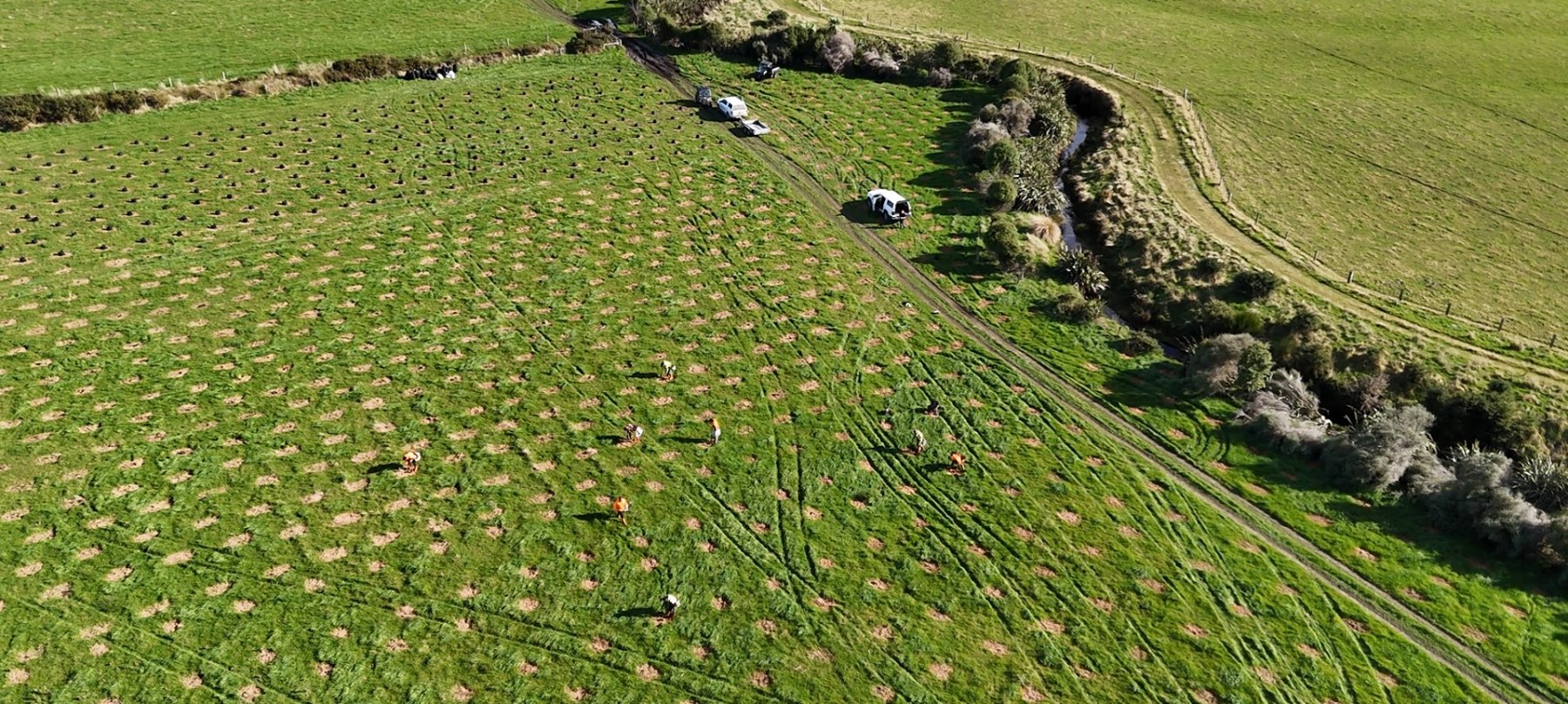
Webster Block planting, May 2026
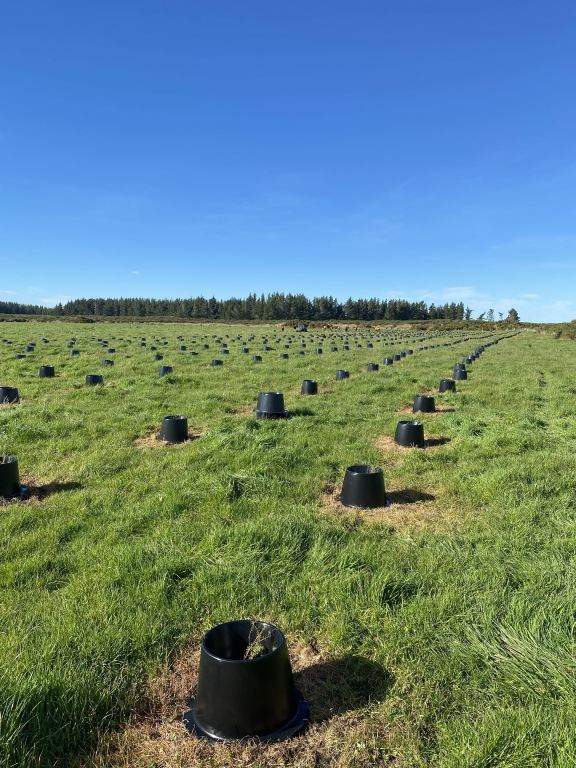
Garto guards installed
The Webster Block is being used to trial innovative approaches that could reduce restoration costs and improve establishment success.
During the 2026 planting, 2,000 Garto tree protectors were installed. Developed in Southland, these guards provide protection from wind and browsing animals while creating favourable growing conditions for native plants.
The Webster Block is one of the largest field trials of this technology undertaken in the region and results will help inform future restoration projects
Measuring Restoration Success
Working with Nature Positive Ltd, the Trust has completed baseline biodiversity assessments, established permanent ecological monitoring plots and developed a biodiversity monitoring framework to create the foundation for long-term reporting on habitat condition and biodiversity gains.
This monitoring programme allows the Trust to track ecological change over time and supports participation in the Waituna Nature Credits Pilot.
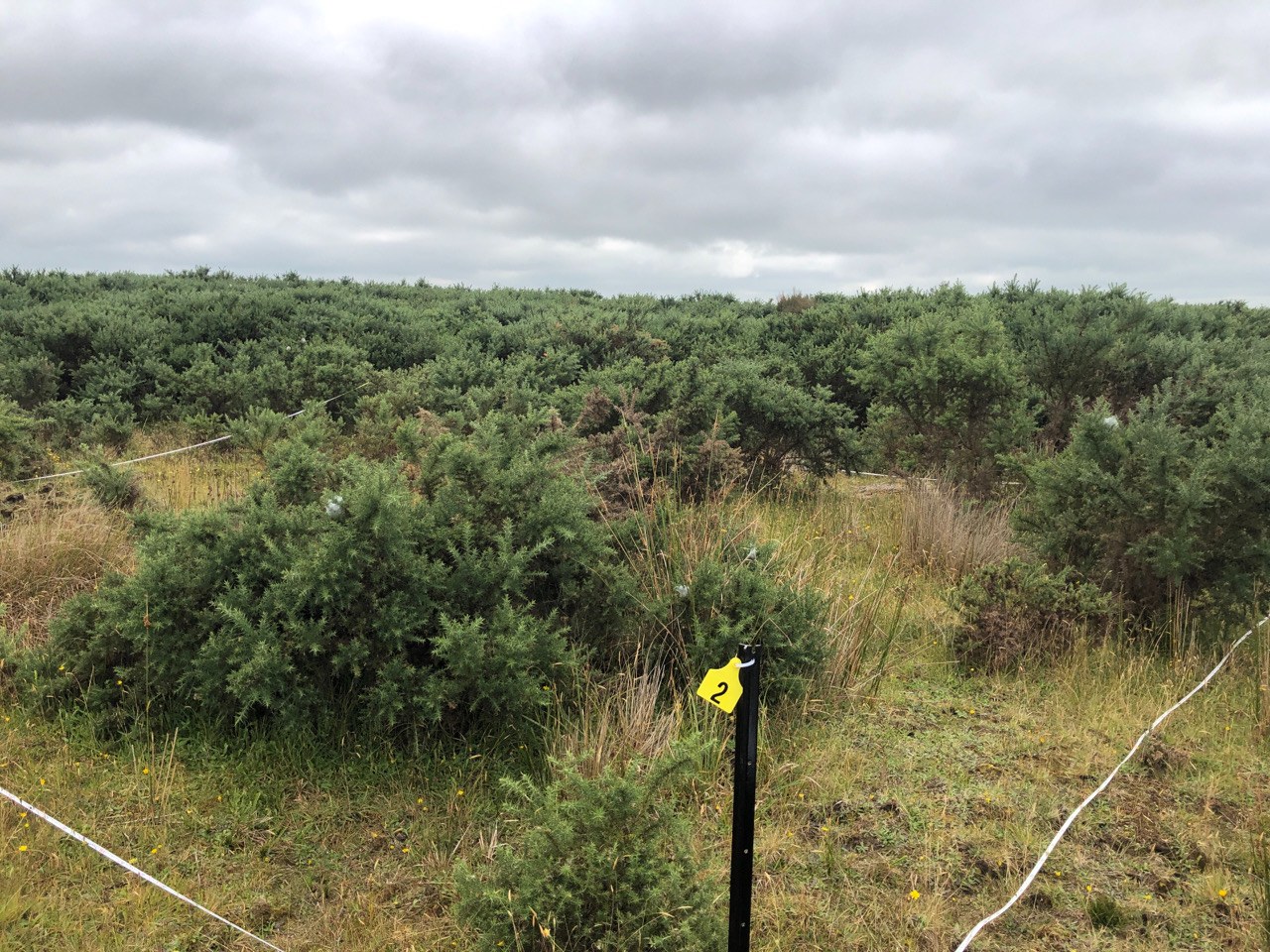
Monitoring plot at the Webster Block
Supporting the Waituna Nature Credits Pilot
The Webster Block plays a central role in the Waituna Nature Credits Pilot by providing:
- On-ground restoration outcomes
- Biodiversity monitoring data
- Demonstration of restoration techniques
- Opportunities to test future biodiversity credit methodologies.
Lessons from Webster Block will help inform future restoration projects across the wider Waituna catchment.
Looking Ahead
The Webster Block restoration programme is guided by a long-term vision extending well beyond the current generation.
By 2030, approximately 30 hectares of the property are expected to have transitioned from pasture to native vegetation, contributing to the Trust's broader goal of restoring biodiversity and improving freshwater health throughout Waituna.
Over time, the land will progressively transition to native habitat, creating stronger ecological connections with the wider Waituna wetland complex and improving resilience across the catchment.

Webster Block visualisation year 1

Webster Block visualisation year 100